
Fabric and Carpet Cleaned Past What Vacuuming Reaches
Upholstery cleaning in Kilgore for vehicle seats, door panels, and carpets with embedded staining and deep soil
Older vehicles and high-mileage family cars develop a category of interior soiling that vacuuming cannot reach: soil worked into upholstery weave over years of use, staining that has dried and bonded to carpet fiber, and embedded debris packed into seat seams and cushion edges. The Detail Proz cleans vehicle upholstery in Kilgore using extraction methods that draw contamination out of the material rather than distributing it further. The owner inspects upholstery fiber type, staining severity, and damage condition on arrival so the cleaning approach and solutions are matched to what the material and the soil level actually require.
Fiber type is the first decision point. Cloth upholstery, leather, and vinyl each respond to different cleaning solutions and extraction pressures. Cloth seat fabric with embedded soil requires wet extraction at appropriate pressure to lift material from the weave without distorting the fiber structure. Leather requires conditioning-compatible cleaning to avoid stripping the surface. Carpet cleaning addresses both the pile surface and the trapped moisture that can remain in the backing if extraction is incomplete. The Detail Proz matches equipment settings and solution chemistry to the material being cleaned rather than applying a single process across all surface types in the vehicle.
Schedule an upholstery inspection with The Detail Proz to confirm which cleaning method fits the fiber types and soil conditions in your vehicle before work starts.
What Proper Upholstery Extraction Requires
Extraction cleaning involves injecting solution into the upholstery material and immediately drawing it back out along with the loosened contamination. The ratio of solution injection to extraction volume matters: insufficient extraction leaves moisture in the foam and backing beneath the upholstery, which creates conditions for mold growth and lingering odor after the surface appears dry. The Detail Proz uses extraction equipment capable of recovering the moisture introduced during cleaning, which means the seat and carpet surfaces dry without the backing remaining saturated.
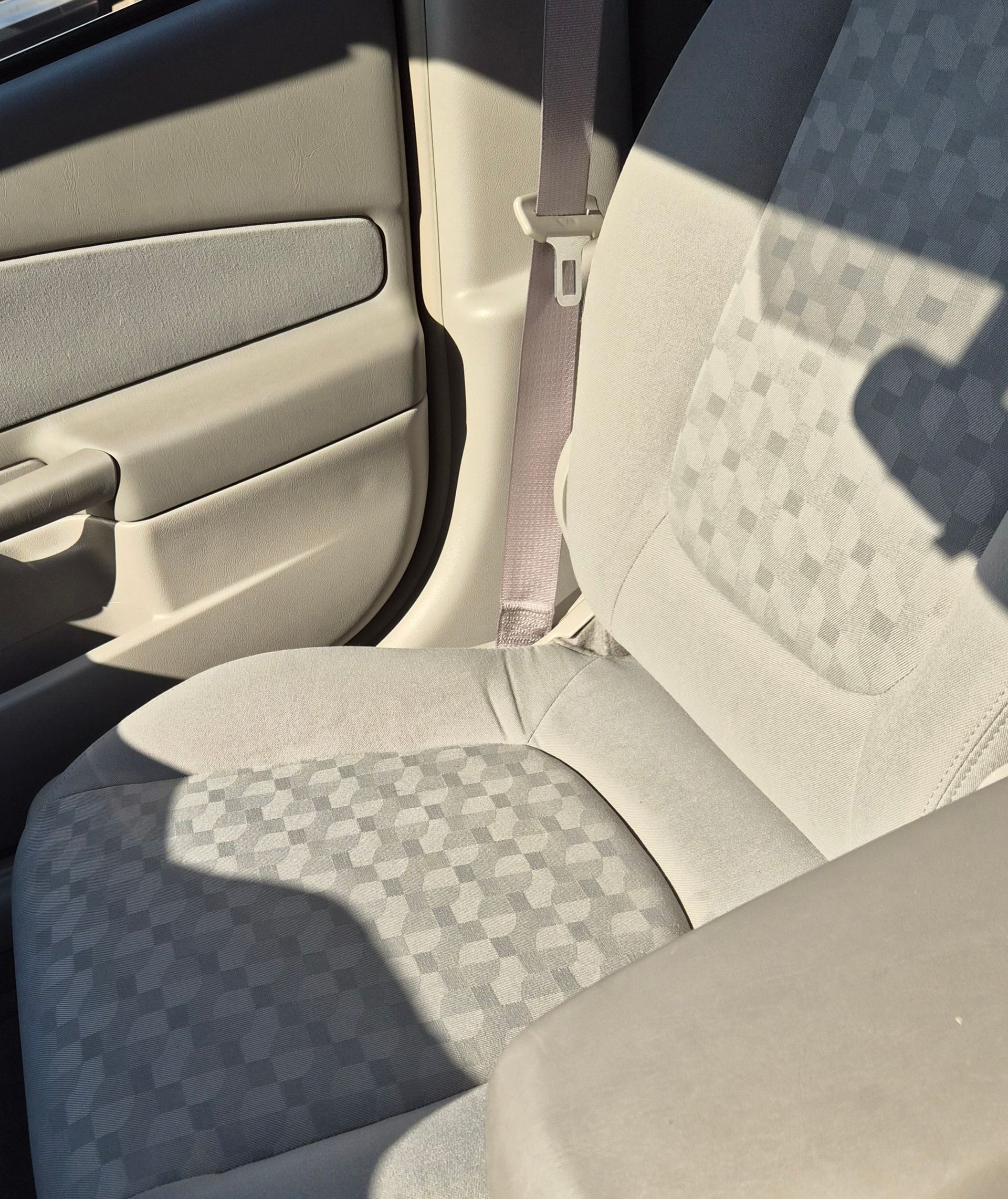
After extraction cleaning is complete, seats should show the original fabric color and weave pattern rather than staining or embedded grayness. Carpet pile should be clean to the base of the fiber, not just the surface. In seam areas and along seat edges—where soil concentrates—the result of thorough extraction is visibly different from a surface clean: those areas should match the rest of the material rather than remaining darker or discolored.
Stains that have dried and set into upholstery fiber may require a pre-treatment dwell period before extraction to break down the bonded contamination. Not all set stains respond fully to a single extraction cycle, particularly where the staining substance has chemically altered the fiber dye—a condition the initial inspection identifies so expectations are accurate. Door panel fabric, which is often overlooked, is included in the upholstery cleaning process because it accumulates the same contact soil as seat surfaces over years of use.
What to Know Before Your Upholstery Cleaning Appointment
The questions below address how vehicle upholstery cleaning is performed, what conditions affect the approach, and what owners should observe once the service is finished.
How does fiber type change the cleaning process?
Cloth upholstery tolerates wet extraction at higher pressure than leather or vinyl, which require gentler solution application and immediate surface treatment to avoid damage. Using the wrong solution concentration on leather can strip the surface finish; under-extracting a cloth seat leaves moisture in the foam beneath. Matching the process to the material is a decision made during the arrival inspection, not assumed in advance.
What does extraction cleaning do that vacuuming cannot?
Vacuuming removes loose surface material—crumbs, hair, surface dust. Extraction reaches soil that has been pressed into the upholstery weave or carpet pile by repeated use. The injection and recovery cycle physically moves liquid through the fiber and draws contamination back out with it. Kilgore vehicles used daily over multiple years often have this category of embedded soil, which is why vacuuming alone doesn't change the visible condition of the material.
Why does incomplete extraction cause problems after cleaning?
When extraction does not remove most of the moisture introduced during cleaning, the foam and backing beneath the upholstery stay wet. That moisture supports mold growth and produces musty odor as the interior heats up. The surface of the seat may feel dry while the padding beneath remains saturated for days. Full extraction recovery during the cleaning process is what prevents this from occurring.
How are set stains handled differently than fresh ones?
Fresh staining has not bonded chemically to the fiber and lifts more readily during standard extraction. Dried, set stains—particularly food-based or biological sources—require a pre-treatment solution applied with a dwell period to loosen the bonded material before extraction begins. Whether that step is sufficient depends on how long the stain has been present and what the staining substance was, which is assessed during the initial inspection.
What should you look for in the finished upholstery to confirm thorough cleaning?
Check the seam lines and edges of seat cushions—these are the areas where soil concentrates during use and where surface cleaning typically falls short. After extraction cleaning, those areas should be consistent in color with the rest of the seat fabric. Carpet near the footwell edges and beneath the front seat should also show even color rather than remaining darker where debris had accumulated.
The Detail Proz also performs upholstery cleaning in Longview, Gladewater, White Oak, Tyler, and Hallsville. To book a vehicle upholstery cleaning, call The Detail Proz at (903) 399-6021 and describe the seat material, staining type, and mileage so the right extraction setup is ready for your appointment.