
Lenses Cleared and Protected Against Returning Haze
Headlight restoration in Kilgore for yellowed or clouded lenses that reduce light output and visibility
Polycarbonate headlight lenses begin to oxidize and haze as their factory UV coating degrades—a process that happens on virtually every vehicle after several years of use, regardless of how the car is maintained otherwise. What changes visibly is a yellowing or milky cloudiness across the lens face that scatters light output rather than projecting it forward. The Detail Proz performs headlight restoration in Kilgore using a sanding, polishing, and ceramic sealant sequence that addresses the oxidation at the lens surface and protects the restored clarity against future UV damage.
The process begins with wet sanding to remove the degraded outer layer of polycarbonate where oxidation has taken hold. Sanding is staged through progressively finer grits to level the surface without introducing deep scratching. Polishing follows to restore optical clarity and eliminate the sanding marks left by the abrasive stage. The final step—ceramic sealant application—is what separates a restoration that holds from one that hazes again within months. Without a UV-resistant sealant bonded to the restored lens, the polycarbonate begins re-oxidizing almost immediately after the abrasive work is done.
Schedule a headlight assessment with The Detail Proz to determine whether your lenses are candidates for restoration or have degraded beyond the polycarbonate's restorable depth.
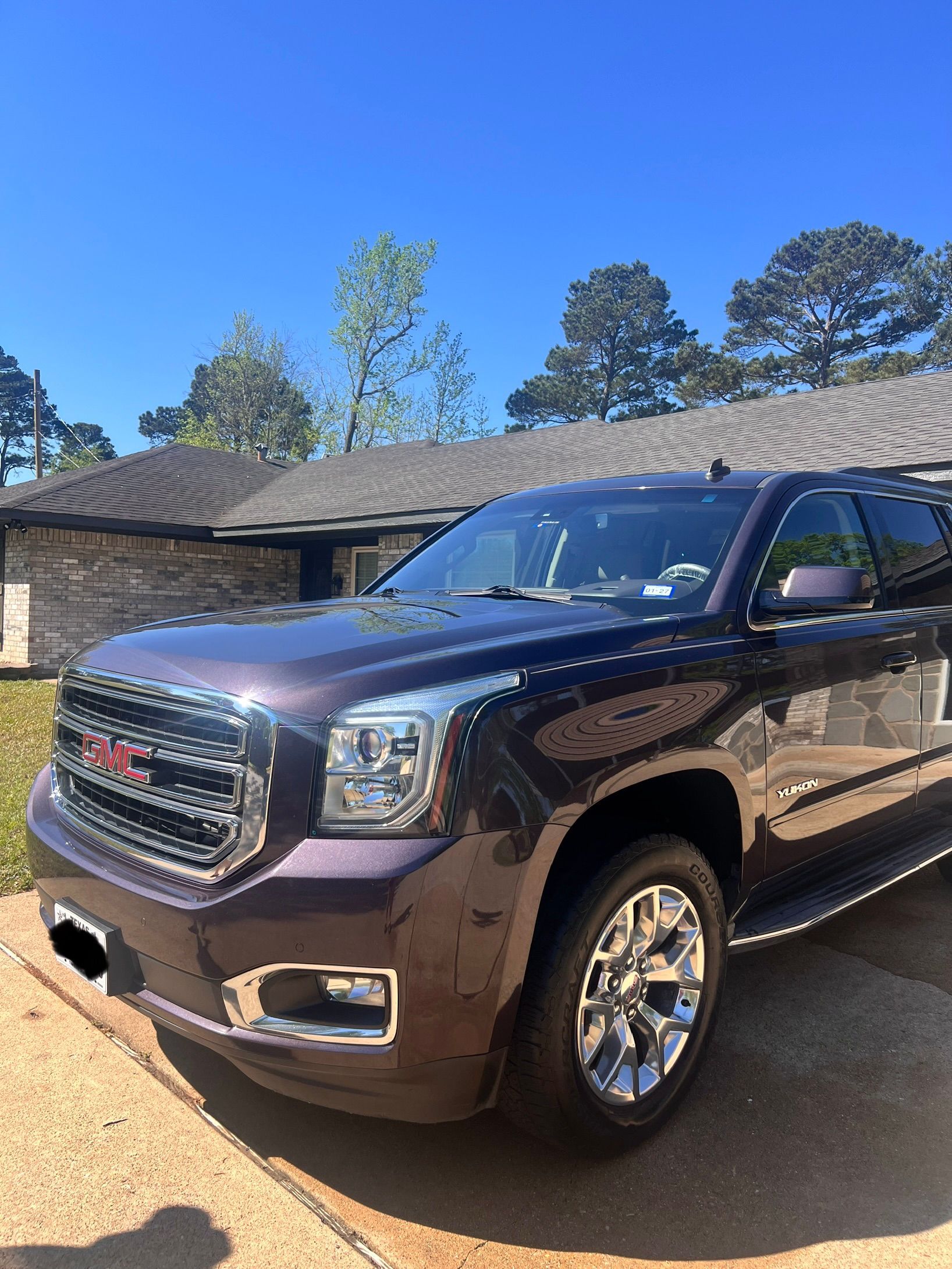
Why the Sealant Step Determines How Long Results Last
Headlight restoration without a protective sealant is a temporary fix. The abrasive stages of sanding and polishing remove the degraded material and restore clarity, but they also strip whatever remains of the original UV coating. A bare polycarbonate surface with no protection re-oxidizes faster than it did before restoration because the lens is starting from zero protection rather than a partially degraded one. The Detail Proz applies a ceramic sealant to the restored lens surface specifically to address this—the sealant bonds to the polycarbonate and provides UV resistance that extends the clarity of the restoration over time.
After restoration is complete, the lenses are visibly clear rather than yellowed or cloudy, and light output from the headlight unit projects in its intended beam pattern rather than scattering. Drivers typically notice the difference at night when low-beam range improves. The ceramic sealant also makes the lens surface easier to clean and more resistant to surface contamination bonding.
There is a physical limit to how many restoration cycles a polycarbonate lens can support. Each sanding stage removes a measurable layer of material. Lenses that have been restored multiple times, or that show crazing and deep pitting rather than surface oxidation alone, may have insufficient remaining thickness to produce full optical clarity through abrasive restoration. That assessment happens before work begins, not after.
Answers About How Headlight Restoration Is Done
The questions below address how the headlight restoration process works, what conditions affect the approach, and what vehicle owners should expect from the finished result.
What causes headlights to turn yellow or cloudy over time?
Polycarbonate lenses are coated at the factory with a UV-resistant layer that degrades with exposure over years of use. Once that coating breaks down, UV radiation begins oxidizing the polycarbonate itself, producing the yellowing and hazing visible from outside the lens. The oxidation is in the outer layer of the lens material, which is why abrasive sanding can remove it.
Why is the sanding stage necessary before polishing?
Sanding removes the oxidized polycarbonate layer that polishing alone cannot fully address. Polishing without sanding first produces a temporary surface improvement but leaves oxidized material in the lens structure. Wet sanding through graded grits removes that layer progressively and creates a surface the polish stage can bring to optical clarity.
How does ceramic sealant differ from the wax or spray coatings sold at auto parts stores?
Ceramic sealants bond chemically to the polycarbonate surface and cure to a hard, UV-resistant layer. Spray coatings sit on top of the surface without bonding and wash away or break down quickly. For a restored headlight lens—where the original UV protection has been fully removed—a bonded sealant is the appropriate protective layer rather than a surface application.
How do you know whether a headlight lens can be restored?
Lenses with surface oxidation and yellowing that haven't been sanded multiple times previously are typically good candidates. Kilgore vehicles that are several model years old but have not had prior restoration work usually fall into this category. Lenses with visible crazing, deep pitting, or prior sanding that has thinned the polycarbonate significantly are assessed differently—the remaining material depth determines what's achievable.
What should the lenses look like when restoration is finished?
The lens face should be optically clear with no visible yellowing, hazing, or sanding marks remaining. Looking through the lens at the reflector and bulb housing inside should be unobstructed, similar to a new lens. The ceramic sealant gives the surface a smooth, uniform appearance rather than a hazy or matte finish left by incomplete polishing.
The Detail Proz also performs headlight restoration in Longview, Gladewater, White Oak, Tyler, and Hallsville. To confirm whether your vehicle's lenses are candidates for restoration, call The Detail Proz at (903) 399-6021 and describe the current condition of the headlight surfaces.