
Paint Contamination That Washing Leaves Behind
Clay and iron decontamination in Kilgore for vehicle paint with bonded road fallout, rail dust, and industrial particles that washing alone cannot remove
A freshly washed vehicle can still have paint that feels rough to the touch and holds a dull appearance because of bonded contaminants embedded in the clear coat—particles that standard washing cannot lift. The Detail Proz in Kilgore offers clay bar treatment and iron decontamination as part of exterior detailing, addressing the ferrous particles, rail dust, and road fallout that bond to paint surfaces and resist conventional washing. These contaminants are not visible in the same way that dirt or water spots are, but they are present in the clear coat layer of virtually every vehicle that has accumulated meaningful road mileage.
The decontamination process works in two stages. Clay bar is worked methodically across the painted surface to physically lift bonded contaminants that washing leaves behind—the feedback from the clay changes as it passes over contaminated areas, which is how the process confirms what is being removed. Iron-removing compounds are applied separately to treat ferrous particles that have oxidized into the clear coat; these compounds react with iron deposits and change color visibly as they break the bond, which makes the treated area's condition easy to observe. Both steps are followed by thorough rinsing before any polish or ceramic sealant is applied.
Arrange an exterior detailing appointment with The Detail Proz to have your paint surface evaluated for contamination before protection is applied.
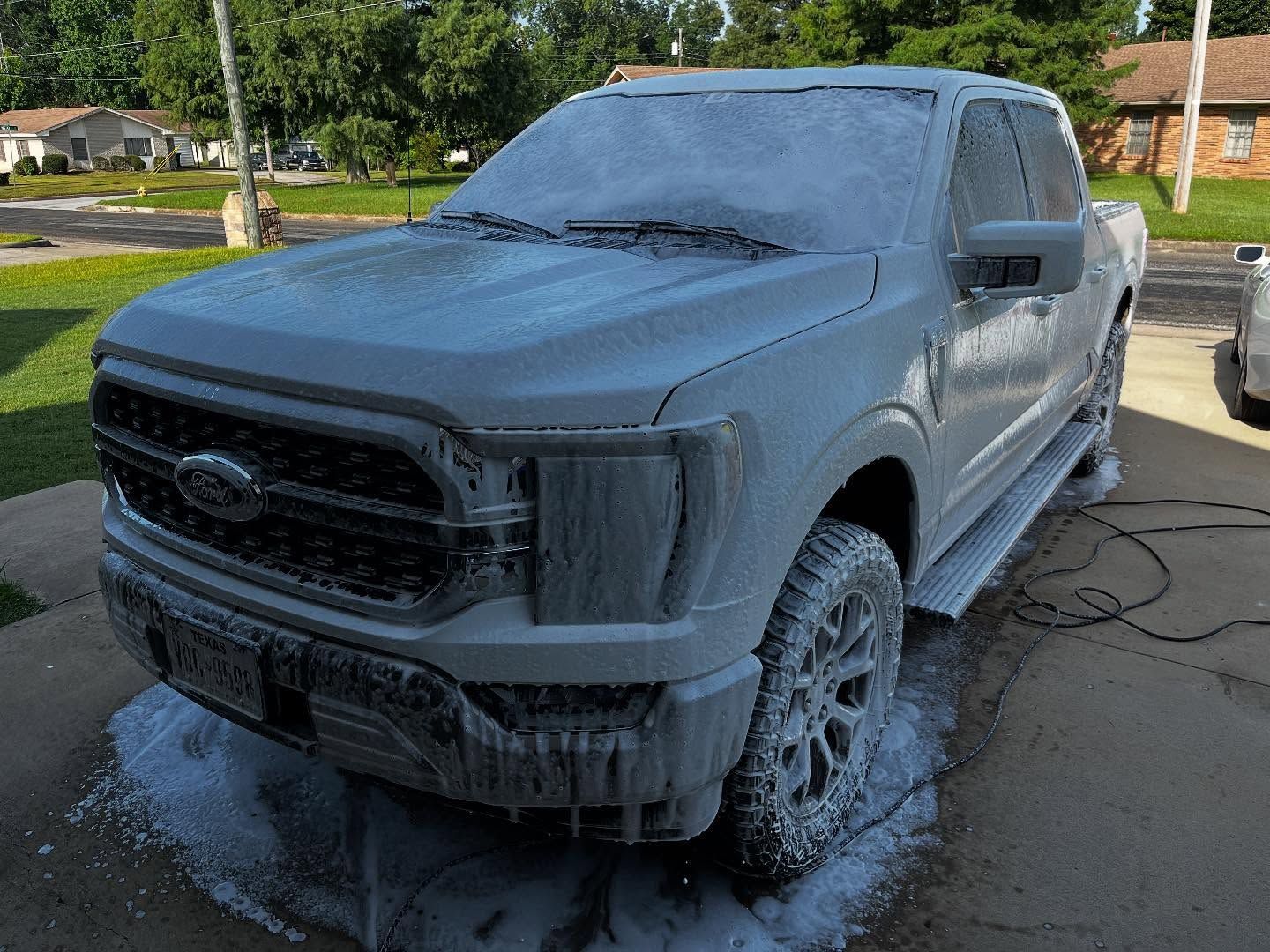
The Difference Between Clean Paint and Decontaminated Paint
Clay and iron decontamination is prep work, not a finishing step—its purpose is to restore the paint surface to a condition where protection products can actually bond correctly. Ceramic sealants and paint coatings applied over contaminated clear coat do not adhere the way they should because the contaminant layer interrupts the bond between the product and the paint. At The Detail Proz, decontamination is included in exterior detailing to prepare the surface before any sealant or polish step is performed, which is the correct sequence for protecting paint rather than sealing contaminants underneath a coating layer.
After both the clay and iron steps are complete, the paint surface feels noticeably smoother when you run your fingers across it—the rough, sandpaper-like texture caused by embedded particles is gone. Paint clarity also improves because surface contamination scatters light in ways that reduce gloss depth, and removing it allows the paint's actual finish to come through cleanly. Vehicles going into a polish or ceramic protection stage after decontamination hold that protection more evenly and for longer because the surface is genuinely clean rather than just visually washed.
Iron decontamination is a step that many exterior washes omit entirely because it adds time and requires a separate product application. The color change that occurs when an iron remover reacts with ferrous particles is one of the clearest indicators of how contaminated a given panel actually was—panels that turn deep purple or reddish-brown during the reaction had significant ferrous particle load that washing had never addressed. That visual confirmation is part of what makes the step informative rather than just procedural.
Questions About Clay and Iron Decontamination
The following questions address how the decontamination process works, what it addresses, and what the paint surface will show once both steps are finished.
How does clay bar treatment differ from washing the vehicle?
Washing removes loose surface contamination, while clay bar physically lifts particles that have bonded into the clear coat layer and cannot be suspended and rinsed away by wash media alone.
Why does iron removal require a separate product from clay bar treatment?
Clay bar addresses a broad range of bonded surface particles through mechanical action, while iron remover uses a chemical reaction specifically formulated to break the bond of ferrous particles that have oxidized into the clear coat—the two steps target different contamination types.
What does the iron decontamination reaction look like on the panel?
Iron-removing compounds change color visibly when they contact ferrous particles embedded in the paint, producing a purple or reddish bleed that shows where contamination was concentrated and confirms the reaction is working.
How does decontamination affect what happens when a ceramic sealant is applied afterward?
Protection products bond directly to the clear coat surface, so applying them over contaminated paint traps particles underneath the coating and reduces adhesion; decontaminating first gives the sealant a clean surface to bond to, which affects how long and how evenly the protection holds.
What should paint feel like after clay and iron decontamination are both complete?
The surface should feel smooth and uniform when you run a clean hand across it—the rough or gritty texture that signals embedded contamination should be gone across all treated panels.
The Detail Proz also performs clay and iron decontamination in Longview, Gladewater, White Oak, Tyler, and Hallsville. Contact The Detail Proz to schedule an exterior detailing appointment and confirm whether decontamination is the right starting point for your vehicle's current paint condition.